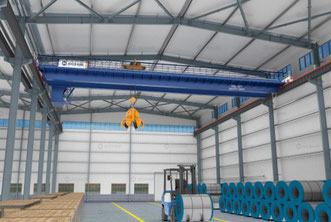
In today’s interconnected economy, the pricing of industrial machinery such as Electric Overhead Traveling (EOT) cranes is influenced by a variety of global factors. Among them, import tariffs play a critical role. These government-imposed duties on imported goods have far-reaching implications not only for manufacturers and suppliers but also for buyers in industries ranging from manufacturing and logistics to construction and power generation. Understanding how tariffs affect EOT crane prices globally can help businesses make informed purchasing decisions, optimize sourcing strategies, and anticipate market fluctuations.
The Role of EOT Cranes in Global Industry
EOT cranes are essential material-handling equipment widely used in steel plants, shipyards, automotive manufacturing, aerospace, and warehouses. They provide safe and efficient lifting and movement of heavy loads, often ranging from a few tons to several hundred tons. Because of their critical role in industrial operations, demand for EOT cranes is strong worldwide. However, the cost of acquiring such equipment is not only determined by production and logistics but also by trade policies, including import tariffs.
What Are Import Tariffs and Why Do They Matter?
Import tariffs are taxes levied on goods entering a country. Governments typically impose tariffs to:
-
Protect domestic industries from cheaper imports.
-
Generate revenue for the state.
-
Encourage local manufacturing and self-reliance.
For EOT cranes, which are often imported due to their specialized engineering, tariffs can add a significant cost layer. A 10–20% tariff on an EOT crane priced at $500,000, for instance, can translate into an additional $50,000–$100,000 for the buyer. This directly impacts the total cost of ownership and can alter purchasing behavior.
Global Variations in Import Tariffs
Different regions enforce different tariff regimes, which means the price of EOT cranes fluctuates significantly depending on the country of import.
-
United States: In recent years, tariffs on steel and aluminum imports have indirectly raised the cost of crane production. Additional tariffs on Chinese-made machinery further elevated EOT crane price.
-
European Union: The EU has relatively lower tariffs for industrial equipment but enforces strict technical standards, which indirectly raise costs through compliance.
-
Asia-Pacific: Countries like India impose tariffs to protect local crane manufacturers, making imported cranes more expensive. In contrast, Southeast Asian nations such as Vietnam or Indonesia have lower tariffs to encourage industrial investment.
-
Middle East & Africa: Import tariffs here vary widely, but high dependence on imported cranes often makes tariffs a decisive factor in procurement decisions.
How Tariffs Affect EOT Crane Prices
1. Direct Price Increase
The most immediate effect of tariffs is the direct increase in crane purchase prices. A 15% tariff imposed on a $1 million EOT crane immediately adds $150,000 to the buyer’s invoice. This makes cranes less affordable and can delay investment projects.
2. Impact on Supply Chains
Tariffs often disrupt global supply chains. If one country becomes too expensive due to tariffs, buyers shift to alternative suppliers, sometimes sacrificing quality or technical specifications. This reshuffling can cause short-term shortages or surpluses, leading to price instability.
3. Higher Production Costs
Even if a crane is manufactured domestically, tariffs on raw materials such as steel, aluminum, or electrical components may increase overall production costs. For instance, tariffs on imported steel significantly impact crane manufacturing since steel accounts for a large portion of the crane’s structural components.
4. Reduced Market Competition
High tariffs reduce the entry of foreign competitors, giving domestic producers more market power. While this benefits local manufacturers, it can also lead to higher prices for buyers due to reduced competition.
5. Currency and Exchange Rate Effects
Tariffs sometimes trigger trade tensions, which can affect currency exchange rates. A weaker domestic currency further amplifies the price of imported cranes, compounding the tariff’s impact.
Case Studies of Tariff Impact
U.S.-China Trade War
During the trade war, tariffs imposed by the U.S. on Chinese machinery and steel products significantly raised the cost of importing cranes from China. American buyers who relied on competitively priced Chinese EOT cranes had to either absorb higher costs or turn to domestic suppliers, often at premium prices.
India’s Tariff Strategy
India imposes tariffs to protect its domestic crane industry. As a result, foreign EOT cranes, while technologically advanced, often become prohibitively expensive for local buyers. This pushes many companies to source cranes locally, even if customization and advanced automation features are limited compared to imports.
Middle East Infrastructure Boom
In the Middle East, governments often reduce or waive tariffs on heavy industrial equipment to encourage infrastructure growth. For example, large-scale construction projects in Saudi Arabia or the UAE have benefited from tariff relaxations, making imported EOT cranes more accessible.
Strategies for Buyers to Mitigate Tariff Impact
Since tariffs are beyond the control of buyers, companies looking to invest in EOT cranes need to adopt smart strategies:
-
Source Locally Where Possible
Working with domestic manufacturers reduces tariff-related costs. Many international crane suppliers establish local factories or partnerships to bypass import duties. -
Diversify Supplier Base
Relying on multiple suppliers from different countries can reduce exposure to tariff risks. If tariffs increase in one country, buyers can switch to alternative sources. -
Negotiate Long-Term Contracts
Long-term supply agreements with fixed pricing or tariff-sharing clauses can help businesses stabilize costs. -
Consider Used or Refurbished Cranes
In high-tariff regions, refurbished cranes can offer a cost-effective alternative while avoiding some of the tariff burdens on brand-new imports. -
Invest in Modular and Customizable Designs
Some suppliers ship EOT crane components separately and assemble them locally. This modular approach can sometimes reduce tariffs since parts may fall under different tariff categories with lower duties than complete machines.
Long-Term Outlook
The global EOT crane market will continue to be shaped by tariff policies, especially as countries adopt more protectionist measures in response to geopolitical tensions. However, the long-term trend suggests increasing localization of crane production. Manufacturers are setting up regional factories to avoid tariff-related cost hikes and meet local compliance standards.
At the same time, global buyers are becoming more sophisticated, factoring tariffs into their procurement strategies rather than treating them as unexpected costs. For many, total cost of ownership - including tariffs, logistics, and after-sales service - is now the key decision-making metric.
Conclusion
Import tariffs exert a significant influence on EOT overhead crane prices globally. They directly increase acquisition costs, reshape supply chains, and alter competition in the market. While some regions benefit from tariff reductions to promote infrastructure growth, others use tariffs to shield domestic industries, often at the expense of higher prices for end-users.
For businesses planning EOT crane purchases, understanding tariff dynamics is essential. By diversifying suppliers, sourcing locally, and negotiating strategic contracts, buyers can mitigate the impact of tariffs and secure cost-effective solutions. In an era where trade policies are as influential as technological innovation, staying informed about tariff trends is just as critical as evaluating crane specifications.